 Русский
  English
  Deutsch
  Español
  العربية
  中文
中文  Türkçe
  Français
  Italiano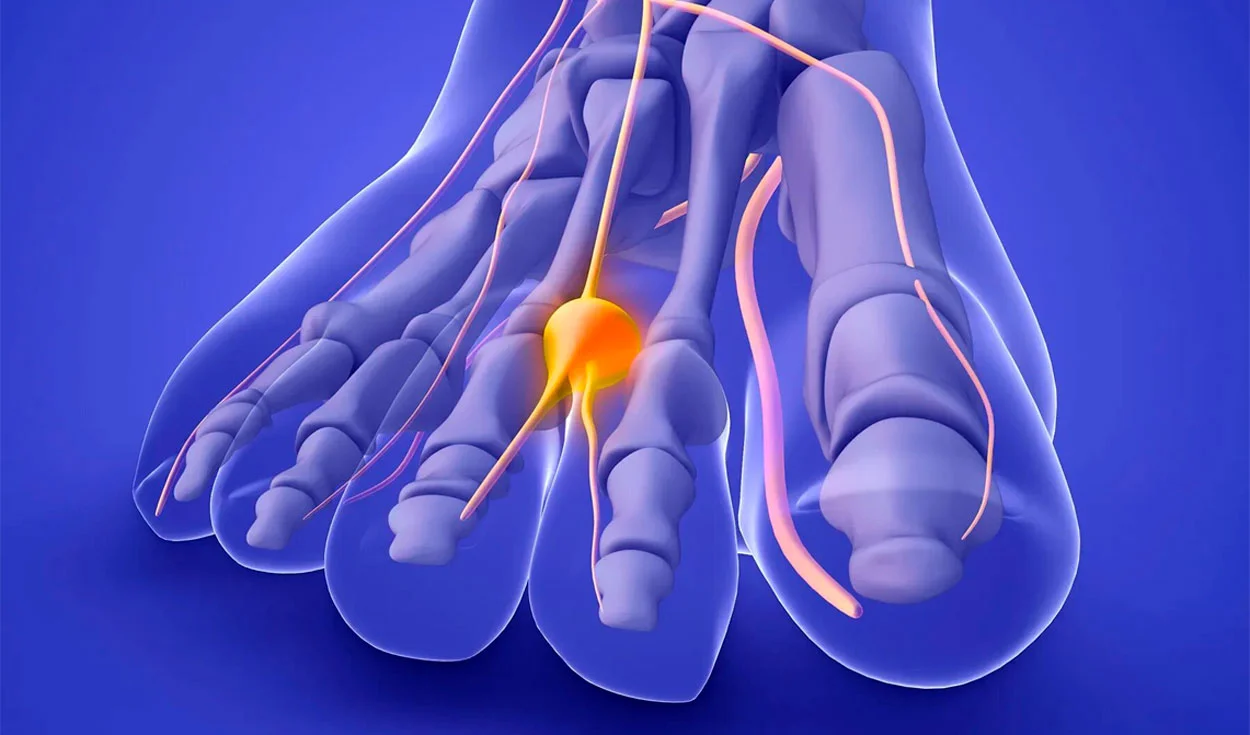
What is Morton's Neuroma?
Morton's Neuroma is a benign thickening (fibrosis) of the common digital plantar nerve, most commonly between the 3rd and 4th metatarsal bones. Nerve compression causes burning pain, numbness, and a sensation of a foreign body in the foot.
It occurs in 30% of women (associated with narrow shoes and high heels). Surgical treatment — neuroma excision — leads to permanent loss of sensation in the toes and does not rule out recurrence.
Symptoms:
- Burning, shooting pain in the forefoot
- Numbness and tingling in the 3rd-4th toes
- Sensation of a “pebble in the shoe”
- Pain worsening in narrow shoes and with prolonged walking
- Relief when removing shoes and massaging
- Positive Mulder's test (click on foot compression)
Risk Factors:
- Narrow shoes, high heels
- Transverse flatfoot
- Hallux valgus
- Excess weight
Facts about Morton's Neuroma
- ICD-10: G57.6
- Prevalence: up to 30% of women
- Gender: women 8-10 times more often
- Location: 3-4 intermetatarsal space
- After excision: loss of sensation
How MIBRAR® treats Morton's Neuroma
Ultrasound Diagnosis
Sono Control Arm™ visualizes the neuroma and measures its size. Positive Mulder's test under ultrasound confirms the diagnosis.
Obtaining Concentrates
CGF — neurotrophic and anti-inflammatory factors. Lipogems® — stem cells with antifibrotic action for neuroma remodeling.
Injection to the Neuroma
Under ultrasound guidance, concentrates are injected around the neuroma — into the intermetatarsal space. Hydrodissection releases the nerve from compression.
Remodeling and Recovery
Stem cells suppress fibrosis and remodel the thickened nerve sheath. Neurotrophic factors restore function. The nerve is preserved — toe sensation is not lost.
MIBRAR® Method Advantages
95% of interventions covered
MIBRAR® covers up to 95% of all spinal neurosurgery and orthopedic operations.
No anesthesia or incisions
Outpatient treatment via 0.3-1.5 mm puncture. No general anesthesia or hospitalization.
No age restrictions
Regeneration at any age. Safe for chronic conditions and anesthesia intolerance.
Rapid improvement
Concentrates have analgesic and anti-inflammatory properties. Relief within days.
Multiple zones at once
Simultaneous treatment of multiple discs or joints in one procedure.
Home the same day
No crutches, braces or rehabilitation needed. MRI follow-up at 8-16 weeks.
MIBRAR® Technology
Cyber Navi Hand™
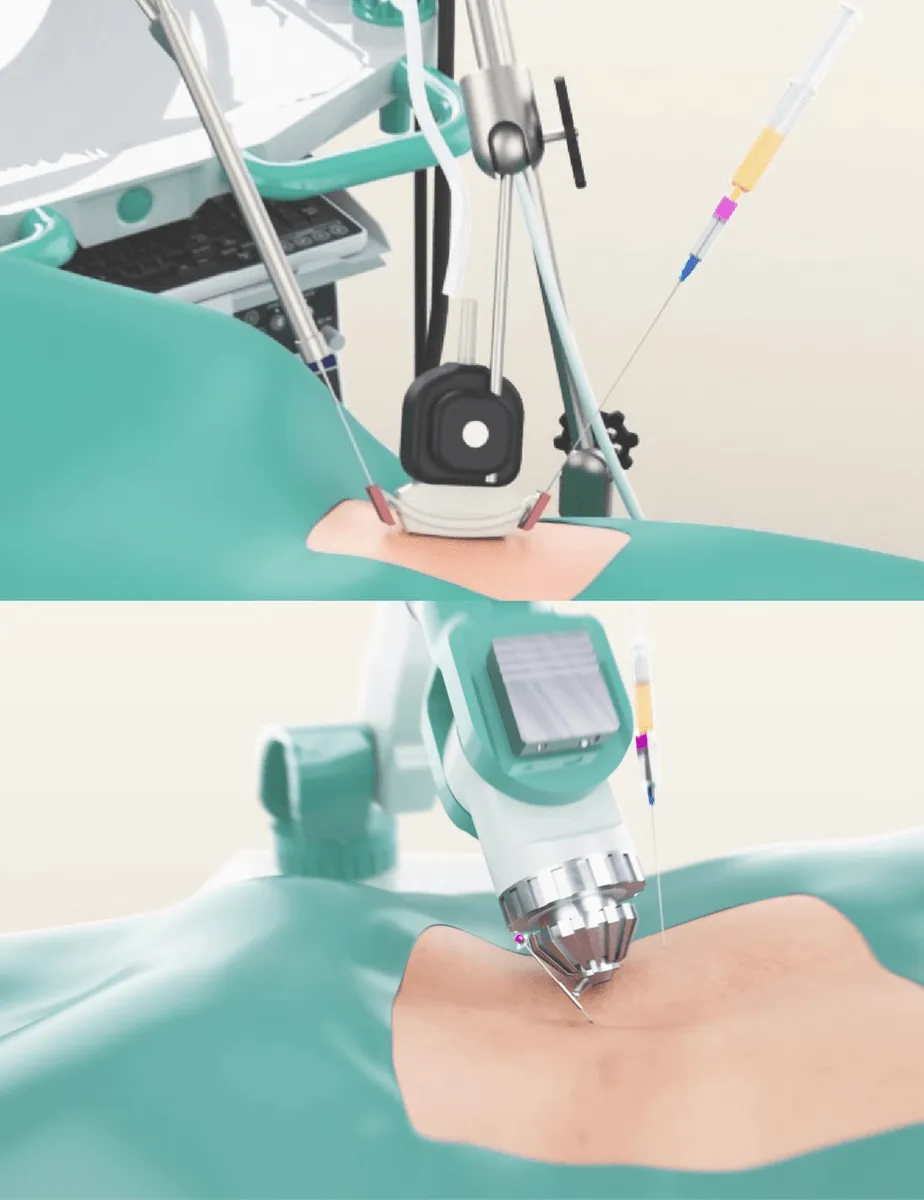
Intraoperative robotic navigation system. Provides precise access to deep structures with 1 mm and 1 degree accuracy.

Sono Control Arm™
Device for intervention under sonographic control. Eliminates open surgeries with real-time visual monitoring.