
 Русский
  English
  Deutsch
  Español
  العربية
  中文
中文  Türkçe
  Français
  Italiano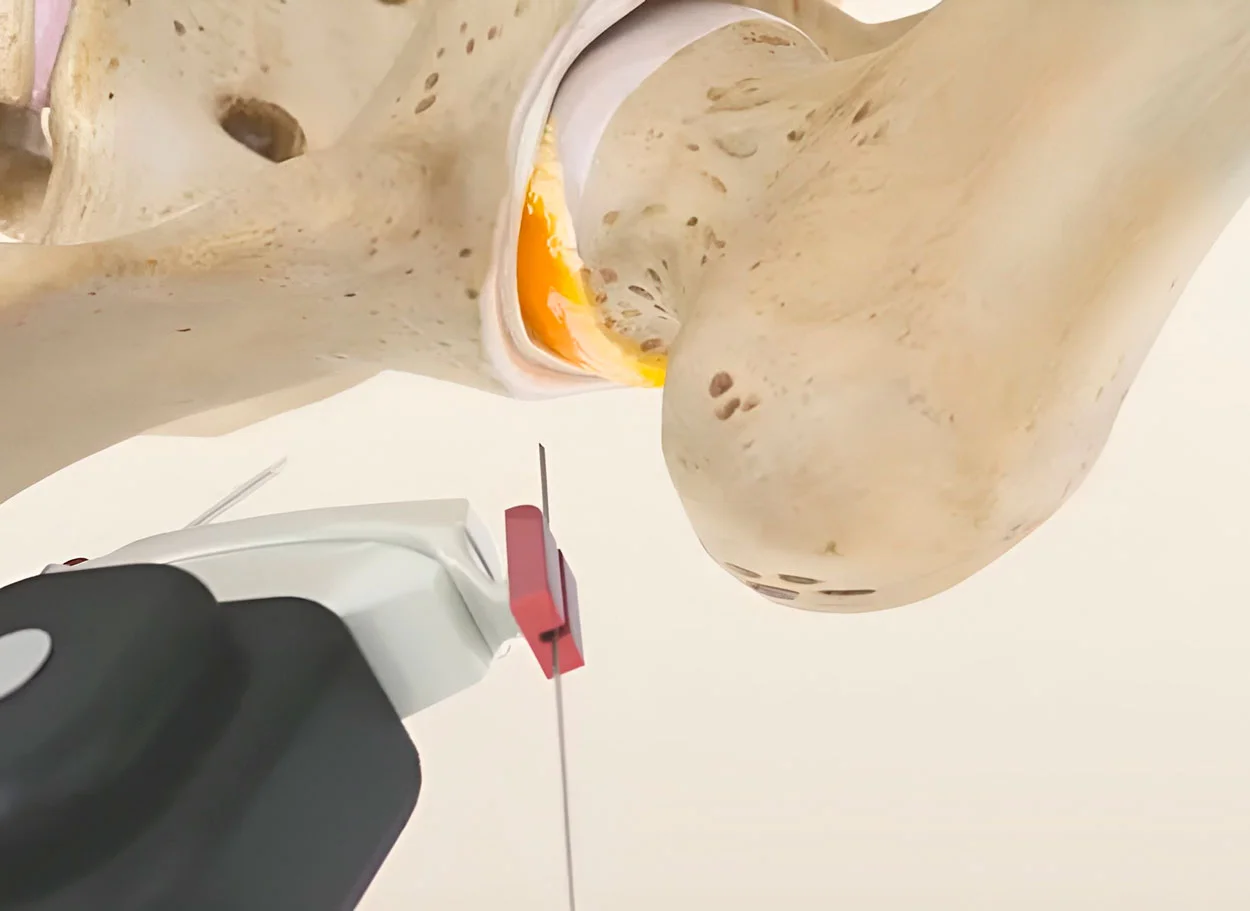
What is hip impingement?
Femoroacetabular impingement (FAI) is a condition in which bony projections on the femoral head or acetabulum cause pinching of soft tissues (labrum and cartilage) during movement. This leads to chronic cartilage damage, pain, and limited mobility.
FAI is the primary cause of hip osteoarthritis in young people. According to research, impingement is detected in 10-15% of the general population, but manifests clinically with an active lifestyle.
Types of FAI:
- Cam-type — thickening (bump) on the femoral neck. More common in young men and athletes
- Pincer-type — excessive coverage of the femoral head by the acetabulum. More common in middle-aged women
- Mixed-type — combination of cam and pincer (most common — up to 86% of cases)
What is damaged in FAI:
- Acetabular labrum — tear, degeneration
- Acetabular cartilage — detachment, thinning
- Femoral head cartilage — damage from contact
- Joint capsule — chronic inflammation
FAI Facts
- ICD-10: M25.85
- Prevalence: 10-15% of population
- Age: 20-50 years
- Mixed-type: up to 86% of cases
- Consequence: early hip osteoarthritis
Symptoms of hip impingement
Typical Symptoms
- Groin pain with hip flexion and rotation
- Limited joint mobility
- Pain with prolonged sitting
- Pain climbing stairs
- Clicking and locking in the joint
- Worsening after physical activity
Risk Groups
- Athletes (football, hockey, martial arts)
- Dancers and gymnasts
- People with sedentary work (prolonged hip flexion)
- Young active patients aged 20-40 years
Why Treating FAI Is Important
- FAI — primary cause of early hip osteoarthritis (coxarthrosis)
- Without treatment, cartilage destruction is irreversible
- Labral damage progresses
- Earlier treatment — better prognosis
How MIBRAR® treats hip impingement
FAI Diagnosis
MRI and X-ray of the hip joint are analyzed to determine FAI type (cam/pincer/mixed), labrum and cartilage condition. Alpha angle and acetabular coverage are assessed.
Obtaining Concentrates
From blood — CGF with anti-inflammatory and chondrogenic factors. From adipose tissue — Lipogems® with stem cells for regeneration of cartilage and labrum.
Injection Under Navigation
Under Sono Control Arm™ ultrasound navigation, concentrates are injected into the joint — to the damaged labrum, areas of damaged cartilage, and capsule. Anti-inflammatory factors reduce edema in the impingement zone.
Tissue Regeneration
Stem cells restore damaged cartilage and labrum. Reduction of inflammation and edema in the hip impingement (FAI) zone increases effective space and reduces pinching. Result — pain reduction and improved mobility.
MIBRAR® Method Advantages
95% of interventions covered
MIBRAR® covers up to 95% of all spinal neurosurgery and orthopedic operations.
No anesthesia or incisions
Outpatient treatment via 0.3-1.5 mm puncture. No general anesthesia or hospitalization.
No age restrictions
Regeneration at any age. Safe for chronic conditions and anesthesia intolerance.
Rapid improvement
Concentrates have analgesic and anti-inflammatory properties. Relief within days.
Multiple zones at once
Simultaneous treatment of multiple discs or joints in one procedure.
Home the same day
No crutches, braces or rehabilitation needed. MRI follow-up at 8-16 weeks.
MIBRAR® Technology
Cyber Navi Hand™
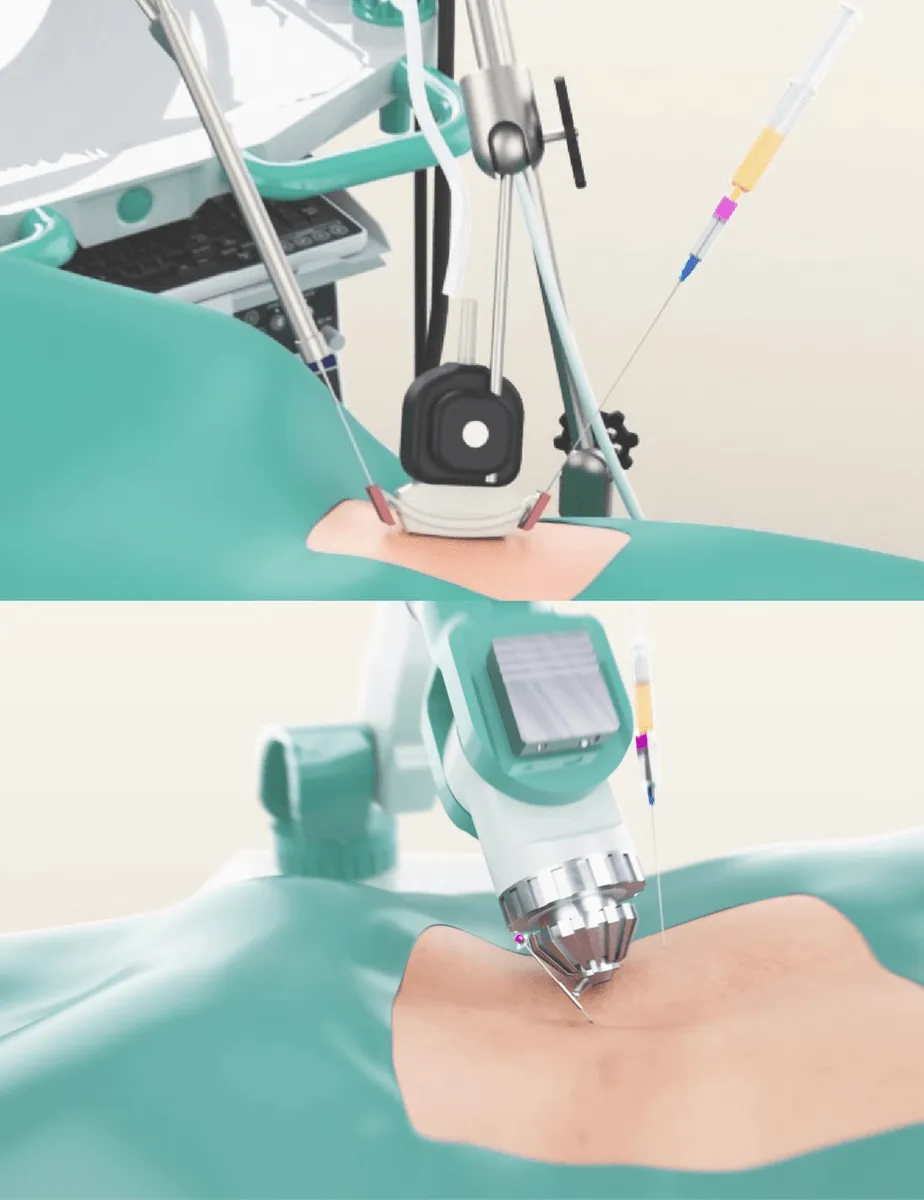
Intraoperative robotic navigation system. Provides precise access to deep structures with 1 mm and 1 degree accuracy.

Sono Control Arm™
Device for intervention under sonographic control. Eliminates open surgeries with real-time visual monitoring.