
 Русский
  English
  Deutsch
  Español
  العربية
  中文
中文  Türkçe
  Français
  Italiano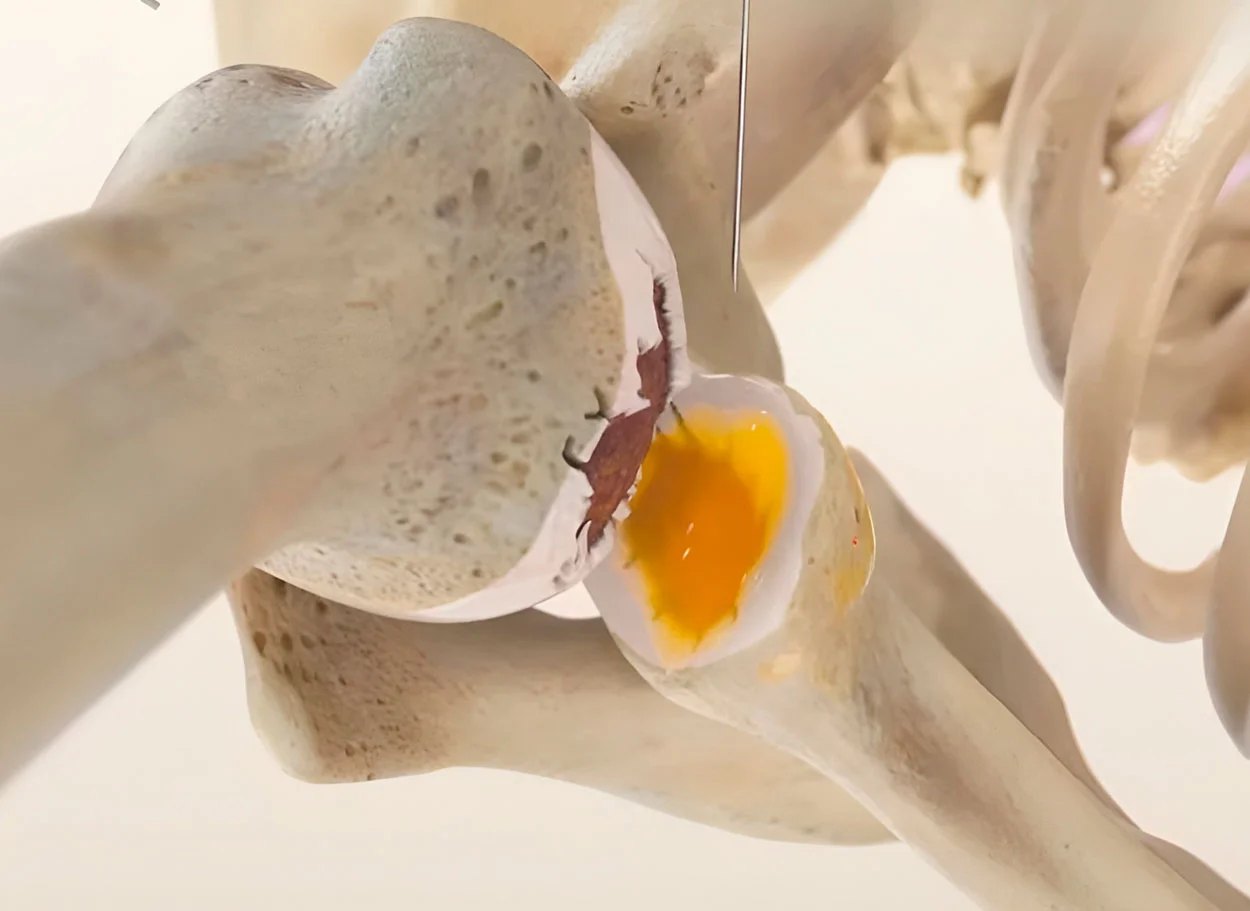
What is shoulder osteoarthritis?
Omarthrosis is a degenerative disease of the shoulder joint in which the cartilage covering the humeral head and the glenoid cavity of the scapula is destroyed. It leads to chronic pain, limited mobility, and reduced quality of life.
Omarthrosis occurs less frequently than knee or hip osteoarthritis, but significantly restricts daily activities — inability to dress, comb hair, or work.
Causes:
- Primary — age-related degeneration (after 60 years)
- Post-traumatic — after fractures, dislocations
- Cuff arthropathy — osteoarthritis after massive rotator cuff tear
- Post-surgical — after shoulder surgeries
- Avascular necrosis — impaired blood supply to the humeral head
Symptoms:
- Deep pain in the shoulder joint
- Limited mobility — raising the arm, reaching behind the back
- Crepitation (crunching) during movement
- Morning stiffness
- Night pain, sleep disturbance
Facts about omarthrosis
- ICD-10: M19.01
- Age: most common after 60 years
- Gender: slightly more common in women
- Shoulder replacement: 25 000+/year (Germany)
- Problem: shoulder prosthesis is more complex and less durable than knee/hip
How MIBRAR® treats omarthrosis
MRI diagnostics
MRI determines the stage of osteoarthritis, cartilage condition, rotator cuff status, presence of osteophytes, and subchondral cysts.
Obtaining concentrates
CGF — chondrogenic and anti-inflammatory factors. Lipogems® — stem cells for cartilage regeneration.
Intra-articular injection
Under Sono Control Arm™ navigation, concentrates are injected into the joint cavity, areas of damaged cartilage, and periarticular tissues. Simultaneously, the bursa and cuff are treated.
Cartilage regeneration
Stem cells differentiate into chondrocytes, initiating the synthesis of new cartilage matrix. Inflammation decreases, mobility returns. Result — postponement or elimination of the need for joint replacement.
MIBRAR® Method Advantages
95% of interventions covered
MIBRAR® covers up to 95% of all spinal neurosurgery and orthopedic operations.
No anesthesia or incisions
Outpatient treatment via 0.3-1.5 mm puncture. No general anesthesia or hospitalization.
No age restrictions
Regeneration at any age. Safe for chronic conditions and anesthesia intolerance.
Rapid improvement
Concentrates have analgesic and anti-inflammatory properties. Relief within days.
Multiple zones at once
Simultaneous treatment of multiple discs or joints in one procedure.
Home the same day
No crutches, braces or rehabilitation needed. MRI follow-up at 8-16 weeks.
MIBRAR® Technology
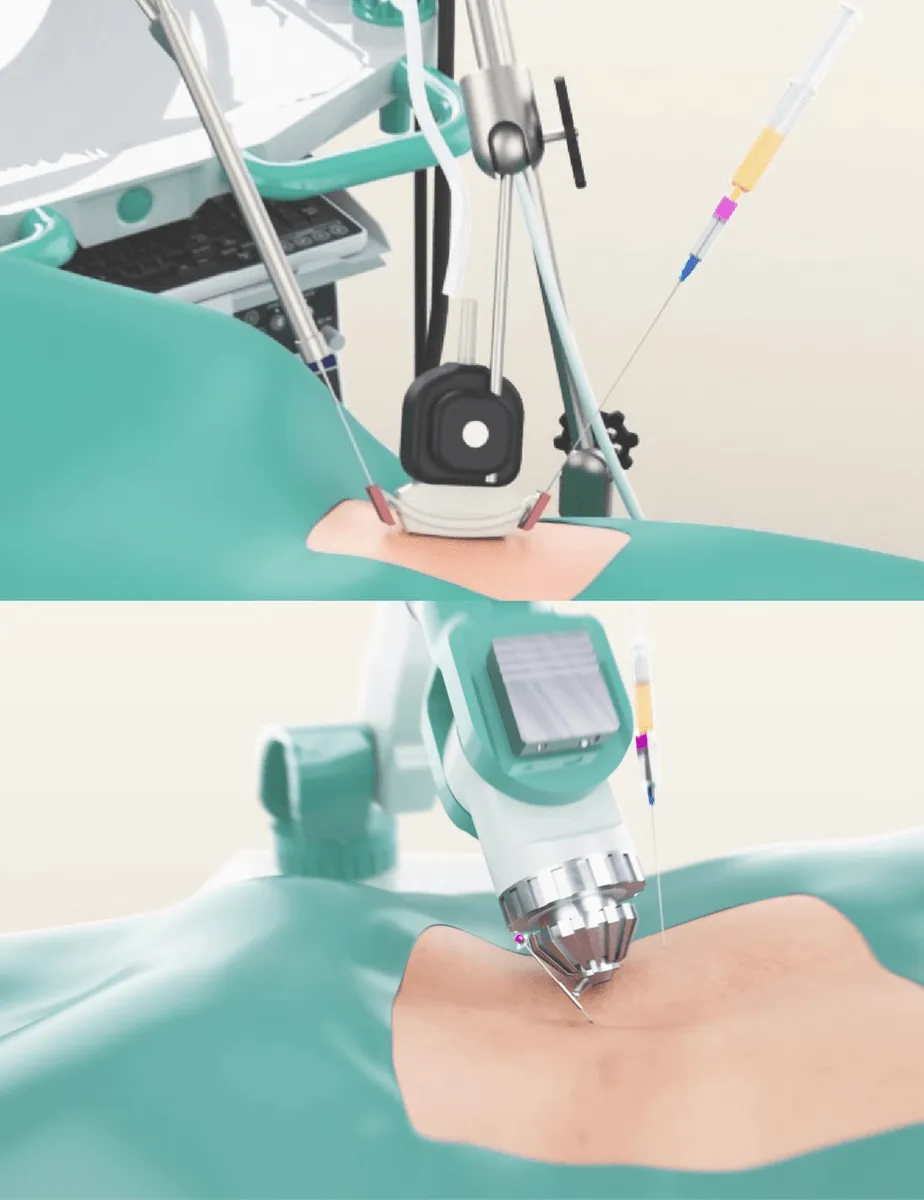
Cyber Navi Hand™
Intraoperative robotic navigation system. Provides precise access to deep structures with 1 mm and 1 degree accuracy.

Sono Control Arm™
Device for intervention under sonographic control. Eliminates open surgeries with real-time visual monitoring.