
 Русский
  English
  Deutsch
  Español
  العربية
  中文
中文  Türkçe
  Français
  Italiano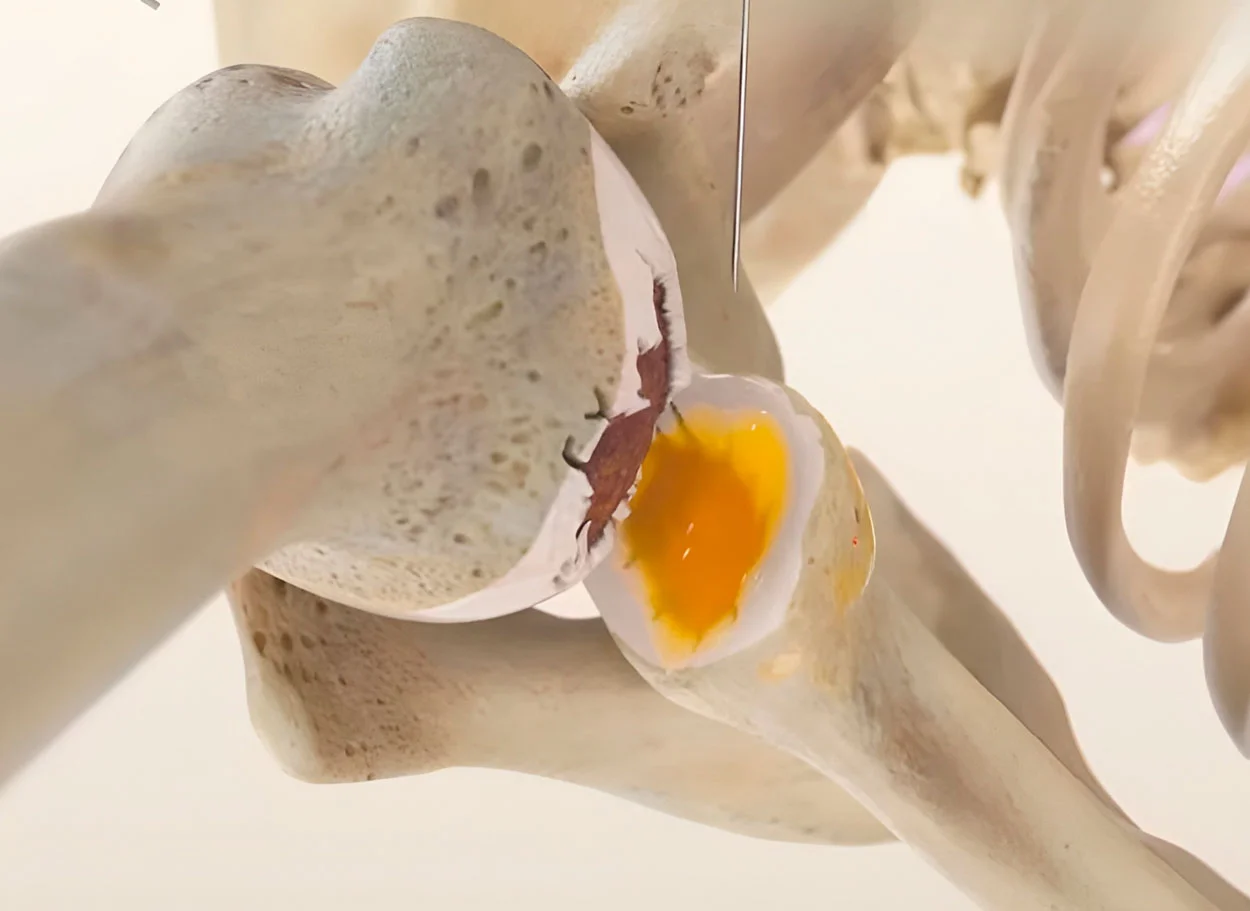
What is Frozen Shoulder?
Frozen Shoulder (adhesive capsulitis, scapulohumeral periarthritis) is a condition in which the shoulder joint capsule becomes inflamed, thickens, and contracts, leading to significant restriction of mobility and severe pain.
The disease affects 2-5% of the population, more commonly women aged 40-60 years. Without treatment, the "frozen" state can last 1 to 3 years, significantly reducing quality of life. In 20-50% of patients, full mobility is not restored even after years.
Three phases of the disease:
- "Freezing" phase (2-9 months) — increasing pain, gradual restriction of movement
- "Frozen" phase (4-12 months) — pain decreases, but stiffness is maximal
- "Thawing" phase (5-24 months) — slow restoration of mobility
Risk factors:
- Diabetes mellitus (5 times higher risk)
- Thyroid diseases
- Immobilization of the shoulder after injury or surgery
- Female gender, age 40-60 years
- Heart diseases, stroke
Facts about Frozen Shoulder
- ICD-10: M75.0
- Prevalence: 2-5% of the population
- Gender: women 2-4 times more often
- Age: 40-60 years
- In diabetes: up to 20% of patients
- Duration: 1-3 years without treatment
Symptoms of Frozen Shoulder
Pain syndrome
- Deep aching pain in the shoulder
- Sharp pain on attempted movement
- Severe nighttime pain (impossible to sleep on the side)
- Pain radiates into the arm to the elbow
Restricted mobility
- Unable to raise arm overhead
- Limited external rotation (combing hair)
- Limited internal rotation (fastening bra)
- Movements restricted both actively and passively
Impact on Life
- Unable to dress independently
- Difficulties with hygiene
- Inability to work (for many professions)
- Sleep disturbances
- Depression and anxiety
Traditional Treatment vs MIBRAR®
| Criterion | Physiotherapy + Injections | Arthroscopic Release | MIBRAR® |
|---|---|---|---|
| Principle | Stretching of capsule + pain relief | Surgical incision of capsule | Regeneration of capsule, elimination of fibrosis and inflammation |
| Anesthesia | None (local for injections) | General | No anesthesia |
| Speed of Results | Months to years | Fast, but requires rehabilitation | Weeks — improvement from first procedure |
| Elimination of Cause | ❌ Symptomatic only | Partial — mechanical incision | ✅ Tissue regeneration, elimination of fibrosis |
| Risk of Recurrence | High | 10-20% | Low — tissue restored |
| Rehabilitation | Prolonged | 6-12 weeks intensive physical therapy | Minimal — days |
How MIBRAR® treats Frozen Shoulder
Capsule Visualization
MRI and dynamic ultrasound (Sono Control Arm™) assess the degree of capsule thickening and fibrosis, condition of the rotator cuff and biceps tendon. Areas of maximum adhesions are identified.
Obtaining Concentrates
CGF — powerful anti-inflammatory factors and growth factors. Lipogems® — stem cells with anti-fibrotic action capable of breaking down adhesions and restoring normal capsule structure.
Intra-articular Injection
Under Sono Control Arm™ guidance, concentrates are injected into the joint cavity, thickened capsule areas (especially axillary recess and rotator interval), and subacromial space.
Capsule Remodeling
Stem cells initiate remodeling process: elimination of fibrosis, restoration of capsule elasticity, reduction of inflammation. Mobility begins to improve within just a few days after the procedure.
Why MIBRAR® is effective for Frozen Shoulder
Frozen Shoulder — capsule fibrosis: elastic tissue is replaced by scar tissue. Traditionally — wait 1-3 years or arthroscopic release. MIBRAR® offers a biological solution: stem cells suppress myofibroblasts (responsible for fibrosis), matrix metalloproteinases break down excess collagen, anti-inflammatory factors interrupt the vicious cycle. Mobility is restored in weeks, not years.
MIBRAR® Method Advantages
95% of interventions covered
MIBRAR® covers up to 95% of all spinal neurosurgery and orthopedic operations.
No anesthesia or incisions
Outpatient treatment via 0.3-1.5 mm puncture. No general anesthesia or hospitalization.
No age restrictions
Regeneration at any age. Safe for chronic conditions and anesthesia intolerance.
Rapid improvement
Concentrates have analgesic and anti-inflammatory properties. Relief within days.
Multiple zones at once
Simultaneous treatment of multiple discs or joints in one procedure.
Home the same day
No crutches, braces or rehabilitation needed. MRI follow-up at 8-16 weeks.
MIBRAR® Technology
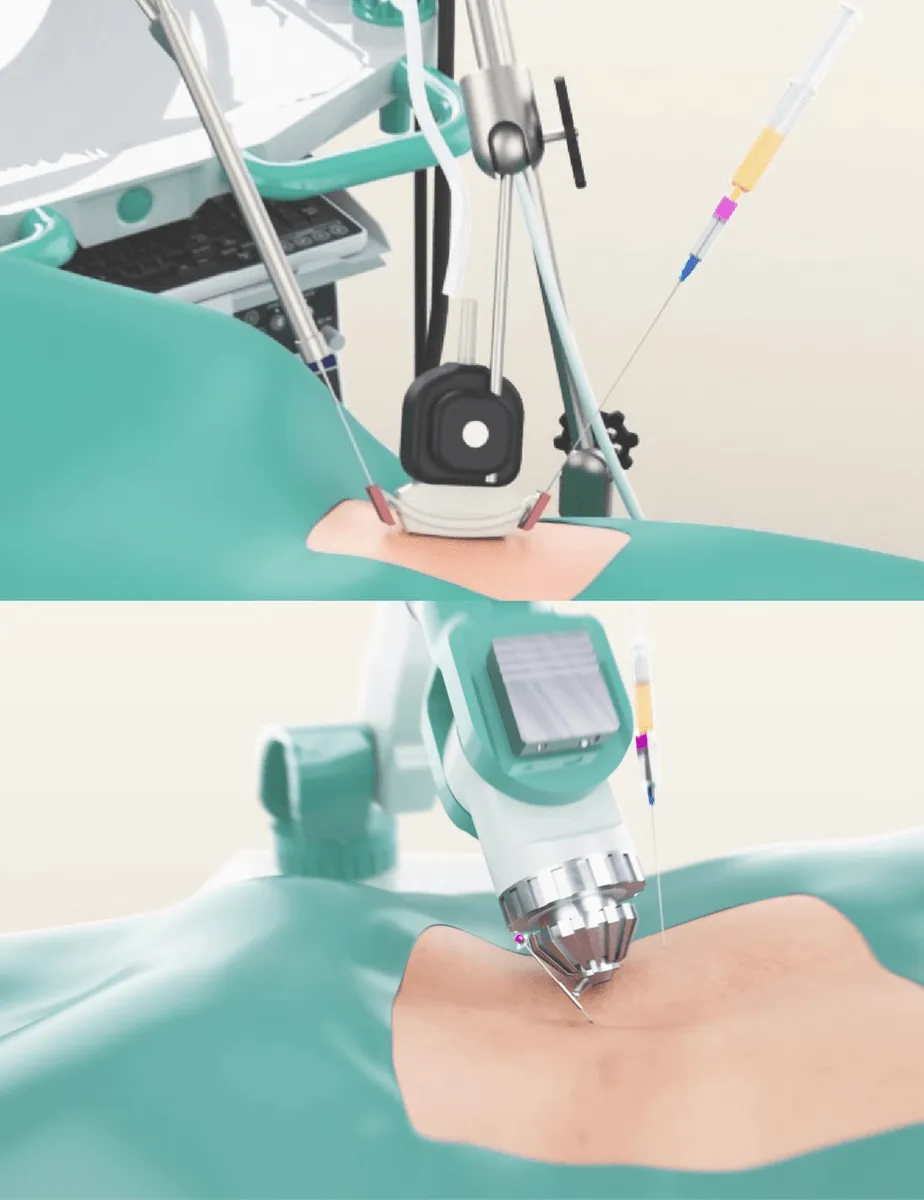
Cyber Navi Hand™
Intraoperative robotic navigation system. Provides precise access to deep structures with 1 mm and 1 degree accuracy.

Sono Control Arm™
Device for intervention under sonographic control. Eliminates open surgeries with real-time visual monitoring.