
 Русский
  English
  Deutsch
  Español
  العربية
  中文
中文  Türkçe
  Français
  Italiano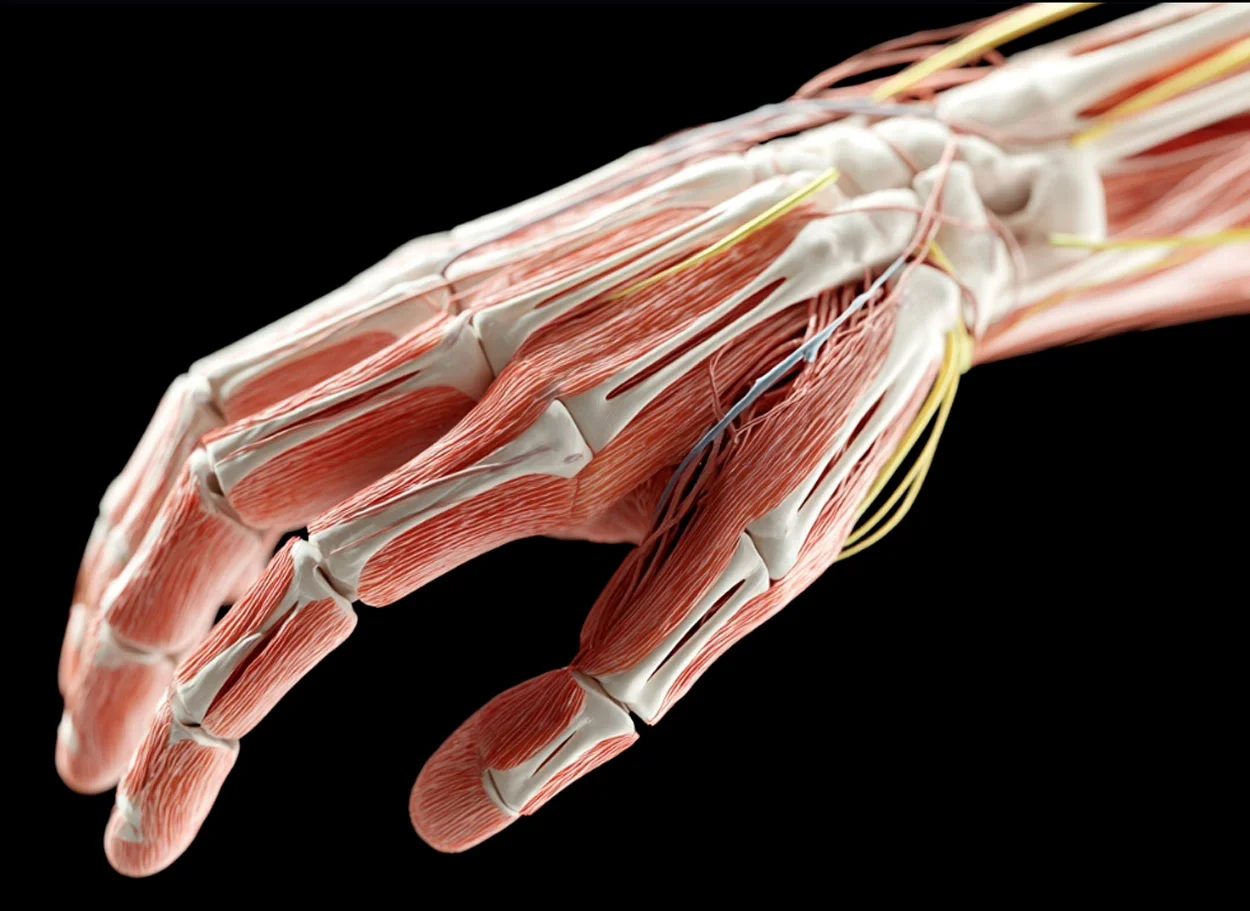
What is Dupuytren's Contracture?
Dupuytren's Contracture is a chronic condition in which the palmar aponeurosis thickens and scars, forming dense cords that gradually pull the fingers into a flexed position. It most commonly affects the ring finger and little finger.
The condition occurs in 4-6% of the population, predominantly in men over 50 years of age of European descent. The main problem with surgical treatment is the high recurrence rate (up to 60-70%) after fasciectomy.
Stages (Tubiana classification):
- N — nodules without contracture
- I — total contracture 0-45°
- II — contracture 45-90°
- III — contracture 90-135°
- IV — contracture more than 135°
Symptoms:
- Dense nodules and cords on the palm
- Gradual finger flexion
- Inability to fully extend the finger
- Difficulty with handshaking and grasping objects
- Inability to place the hand flat on the table (Hueston test)
Facts about Dupuytren
- ICD-10: M72.0
- Prevalence: 4-6% of population
- Gender: men 6-10 times more often
- Age: over 50 years
- Recurrence after surgery: 60-70%
How MIBRAR® treats Dupuytren's Contracture
Ultrasound assessment
Sono Control Arm™ visualizes nodules, cords, and their position relative to finger nerves and vessels. The degree of contracture is assessed.
Obtaining concentrates
CGF — antifibrotic factors and matrix metalloproteinases. Lipogems® — stem cells with potent antifibrotic effects that suppress myofibroblasts.
Injection into fibrotic area
Under ultrasound guidance, concentrates are injected directly into nodules and cords — precisely into the fibrotic zone, avoiding nerves and vessels.
Tissue remodeling
Stem cells suppress myofibroblasts and trigger scar tissue remodeling. The cords soften, and elasticity is restored. Fingers gradually straighten.
MIBRAR® Method Advantages
95% of interventions covered
MIBRAR® covers up to 95% of all spinal neurosurgery and orthopedic operations.
No anesthesia or incisions
Outpatient treatment via 0.3-1.5 mm puncture. No general anesthesia or hospitalization.
No age restrictions
Regeneration at any age. Safe for chronic conditions and anesthesia intolerance.
Rapid improvement
Concentrates have analgesic and anti-inflammatory properties. Relief within days.
Multiple zones at once
Simultaneous treatment of multiple discs or joints in one procedure.
Home the same day
No crutches, braces or rehabilitation needed. MRI follow-up at 8-16 weeks.
MIBRAR® Technology
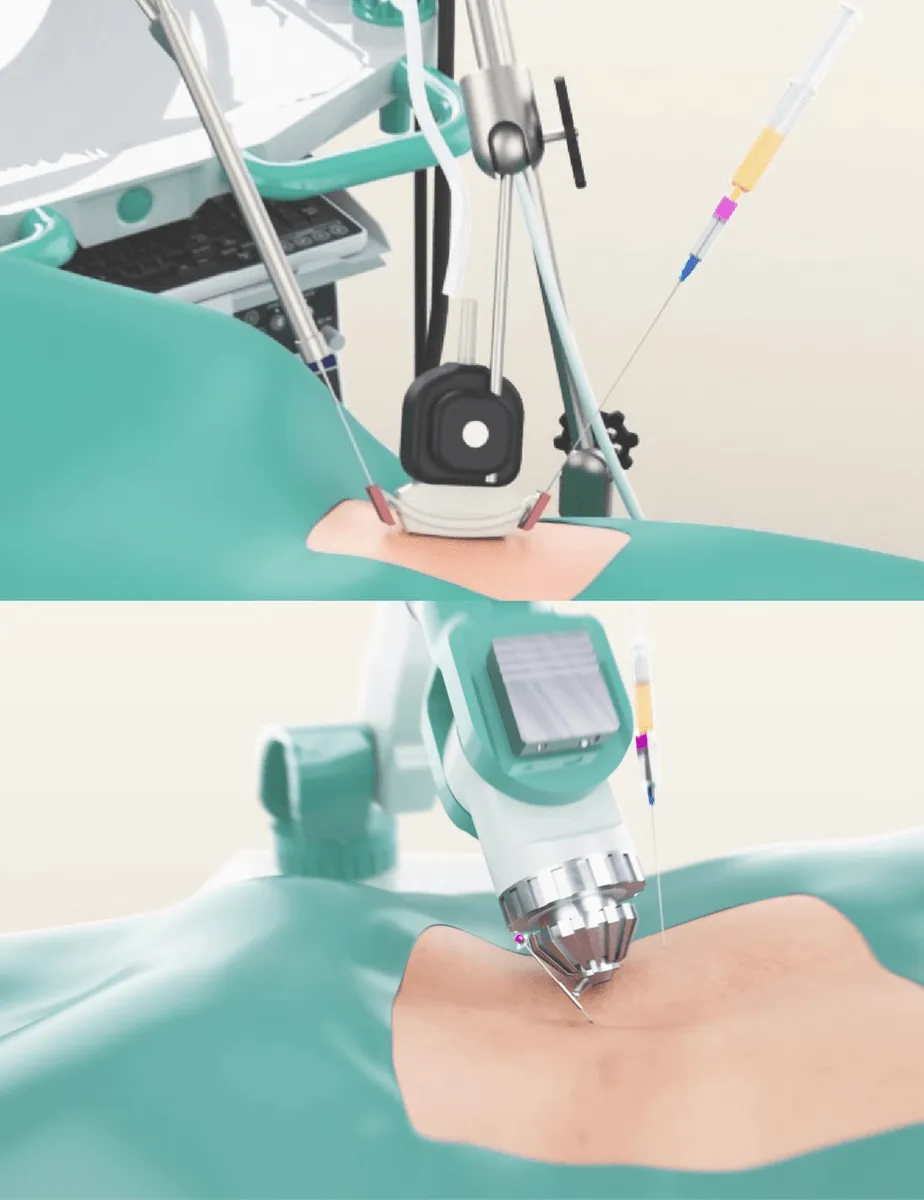
Cyber Navi Hand™
Intraoperative robotic navigation system. Provides precise access to deep structures with 1 mm and 1 degree accuracy.

Sono Control Arm™
Device for intervention under sonographic control. Eliminates open surgeries with real-time visual monitoring.