
 Русский
  English
  Deutsch
  Español
  العربية
  中文
中文  Türkçe
  Français
  Italiano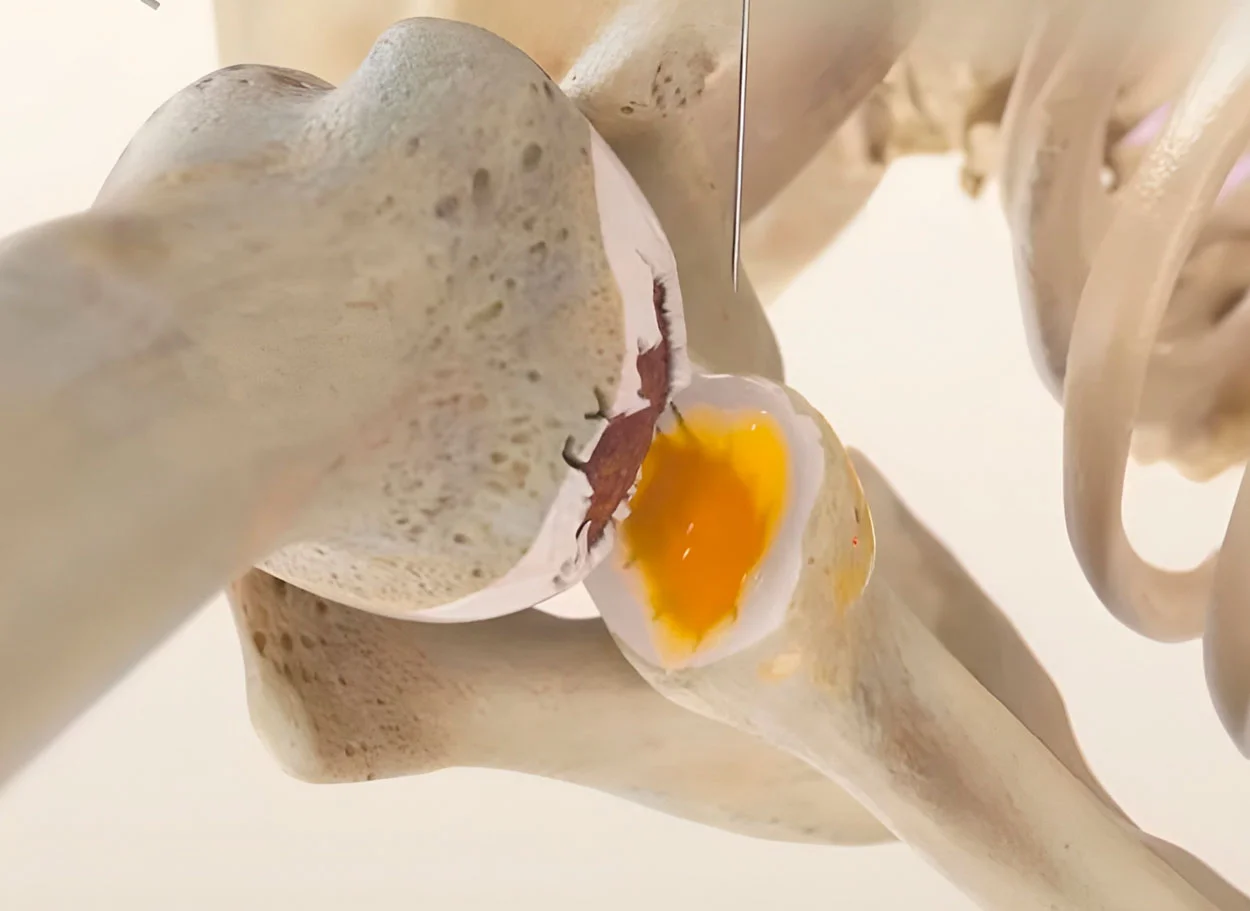
What is calcific tendinitis?
Calcific tendinitis is a condition in which calcium hydroxyapatite crystals are deposited in the tendons of the rotator cuff. The size of the deposits can reach several centimeters, causing severe pain and complete restriction of mobility.
The condition affects 2.7-20% of the population, more commonly women aged 30-60 years. In 80% of cases, the supraspinatus tendon is involved. Pain during an acute attack is one of the most severe in orthopedics.
Disease phases:
- Preformative — metaplasia of tendon tissue, preparation for calcification
- Formative — active calcium deposition, chronic pain
- Resorptive — the body attempts to dissolve the calcium. The most painful phase — acute pain, swelling
- Post-calcific — tendon remodeling
Causes:
- Exact cause unknown
- Impaired tendon blood supply
- Tissue hypoxia
- Hormonal factors (more common in women)
- Genetic predisposition
Facts about calcific tendinitis
- ICD-10: M75.3
- Prevalence: 2.7-20% of population
- Gender: women 1.5 times more often
- Age: 30-60 years
- Location: 80% — supraspinatus muscle
Symptoms of calcific tendinitis
Chronic phase
- Aching pain in the shoulder
- Worsens with arm elevation
- Night pain
- Moderate restriction of mobility
- May be asymptomatic
Acute attack (resorption)
- Sudden unbearable pain
- Complete inability to move the arm
- Swelling and redness of the shoulder
- Pain not relieved by standard analgesics
- Lasts days to weeks
Diagnosis
- X-ray — calcific deposits visible
- Ultrasound — size and structure of deposits
- MRI — tendon condition
- Calcific deposit type determines prognosis
How MIBRAR® treats calcific tendinitis
Visualization of the calcific deposit
Ultrasound and X-ray determine the size, structure, and phase of the calcific deposit. Sono Control Arm™ visualizes the deposit in real time for precise planning.
Obtaining concentrates
CGF — anti-inflammatory factors for pain relief and enzymes that promote calcium dissolution. Lipogems® — stem cells for regeneration of the damaged tendon.
Injection into the calcification zone
Under Sono Control Arm™ navigation, concentrates are injected directly into the calcific deposit and surrounding tissues. If necessary, barbotage (lavage) of the calcific deposit is performed.
Resorption and regeneration
Growth factors accelerate the natural calcium resorption process. Stem cells restore the tendon structure after the deposit dissolves. Result — elimination of pain and restoration of mobility.
MIBRAR® Method Advantages
95% of interventions covered
MIBRAR® covers up to 95% of all spinal neurosurgery and orthopedic operations.
No anesthesia or incisions
Outpatient treatment via 0.3-1.5 mm puncture. No general anesthesia or hospitalization.
No age restrictions
Regeneration at any age. Safe for chronic conditions and anesthesia intolerance.
Rapid improvement
Concentrates have analgesic and anti-inflammatory properties. Relief within days.
Multiple zones at once
Simultaneous treatment of multiple discs or joints in one procedure.
Home the same day
No crutches, braces or rehabilitation needed. MRI follow-up at 8-16 weeks.
MIBRAR® Technology
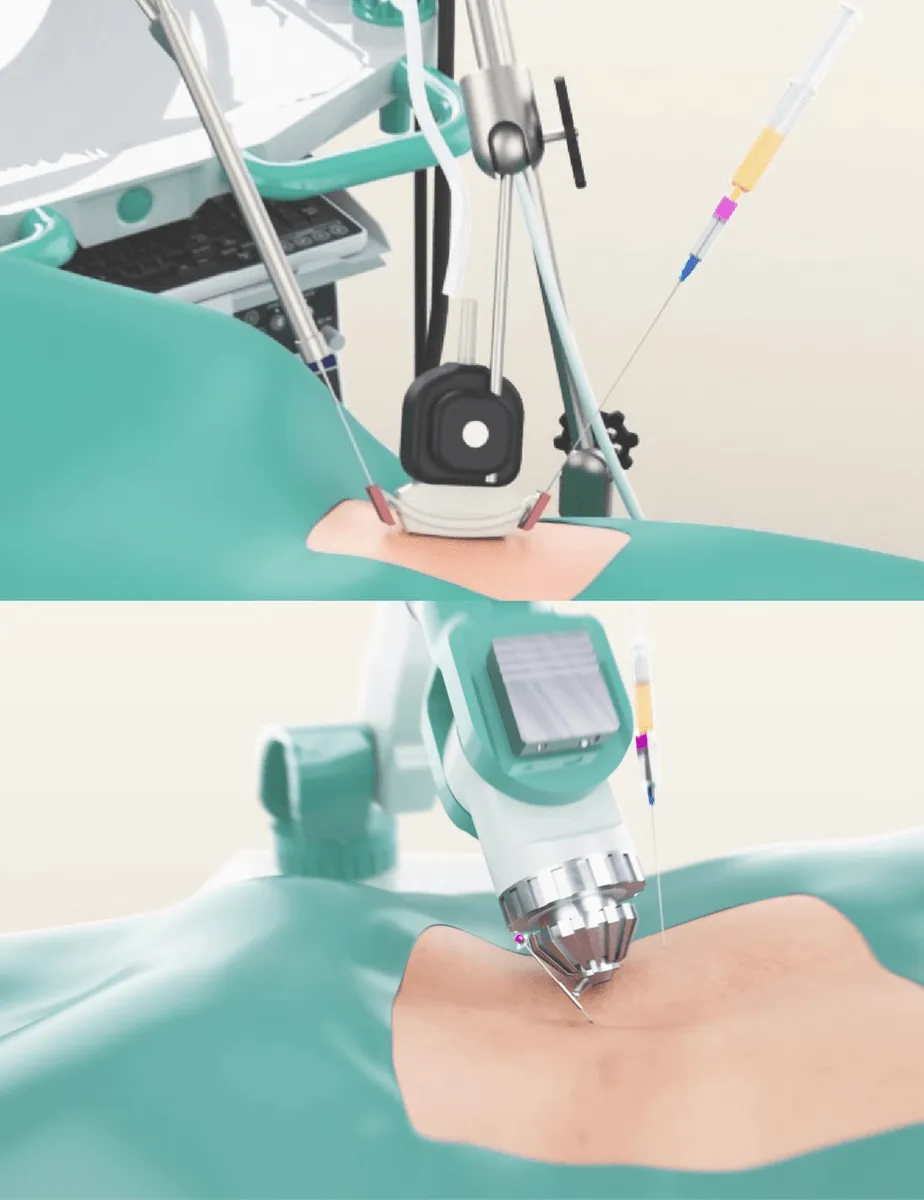
Cyber Navi Hand™
Intraoperative robotic navigation system. Provides precise access to deep structures with 1 mm and 1 degree accuracy.

Sono Control Arm™
Device for intervention under sonographic control. Eliminates open surgeries with real-time visual monitoring.