 Русский
  English
  Deutsch
  Español
  العربية
  中文
中文  Türkçe
  Français
  Italiano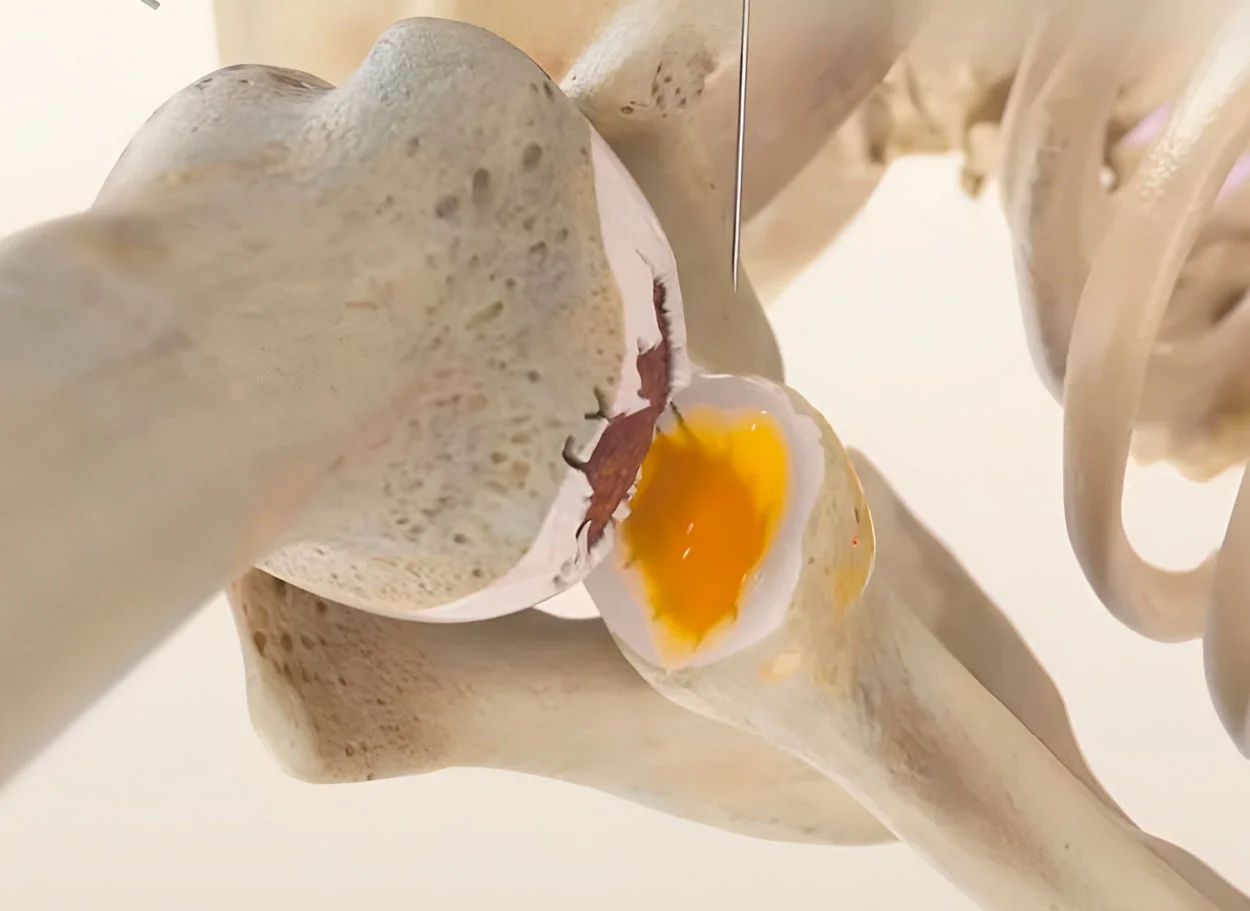
What is shoulder impingement syndrome?
Subacromial impingement syndrome is the compression (impingement) of the rotator cuff tendons and subacromial bursa between the humeral head and the acromion of the scapula during arm elevation. This is the most common cause of shoulder pain — up to 44-65% of all cases.
Chronic impingement leads to inflammation, degeneration, and eventually — rotator cuff tendon tears. Impingement is the main cause of rotator cuff tears in people over 40 years old.
Stages (Neer classification):
- Stage I — edema and hemorrhage (age <25 years, reversible)
- Stage II — fibrosis and tendinitis (25-40 years)
- Stage III — bone spurs, tendon tears (>40 years)
Causes of impingement:
- Acromion shape — hooked (type III) narrows the space
- Osteophytes — bone spurs on the acromion
- Bursa thickening — chronic inflammation
- Overload — work with arms raised, sports (swimming, tennis)
- Cuff weakness — humeral head shifts upward
Facts about impingement
- ICD-10: M75.1
- Frequency: 44-65% of shoulder pains
- Age: from 25 years
- Complication: rotator cuff tear
- Acromioplasty: 30 000+/year (Germany)
Symptoms of impingement
Typical symptoms
- Pain on arm elevation (60-120° — «painful arc»)
- Night pain when lying on the shoulder
- Weakness with abduction and rotation
- Crepitus with movement
- Pain with internal rotation behind the back
Risk groups
- Swimmers, tennis players, volleyball players
- Painters, plasterers, electricians
- People with slouched posture
- Patients after shoulder injury
Why treatment is important
- Without treatment → rotator cuff tear
- Muscle fatty degeneration is irreversible
- The earlier the treatment — the better the prognosis
- MIBRAR® prevents tears
How MIBRAR® treats impingement
Ultrasound diagnostics
Sono Control Arm™ assesses the condition of the rotator cuff tendons, bursa, and acromion shape dynamically — during arm elevation, the impingement zone is visualized.
Obtaining concentrates
CGF — anti-inflammatory factors to reduce bursa swelling. Lipogems® — stem cells for regeneration of damaged rotator cuff tendons.
Subacromial injection
Under navigation, concentrates are injected into the subacromial space (into the bursa), the area of damaged tendons, and the joint cavity.
Regeneration and impingement relief
Anti-inflammatory factors reduce bursa swelling — freeing space for the tendons. Stem cells regenerate damaged tissue. Result — pain disappearance and free arm elevation.
MIBRAR® Method Advantages
95% of interventions covered
MIBRAR® covers up to 95% of all spinal neurosurgery and orthopedic operations.
No anesthesia or incisions
Outpatient treatment via 0.3-1.5 mm puncture. No general anesthesia or hospitalization.
No age restrictions
Regeneration at any age. Safe for chronic conditions and anesthesia intolerance.
Rapid improvement
Concentrates have analgesic and anti-inflammatory properties. Relief within days.
Multiple zones at once
Simultaneous treatment of multiple discs or joints in one procedure.
Home the same day
No crutches, braces or rehabilitation needed. MRI follow-up at 8-16 weeks.
MIBRAR® Technology
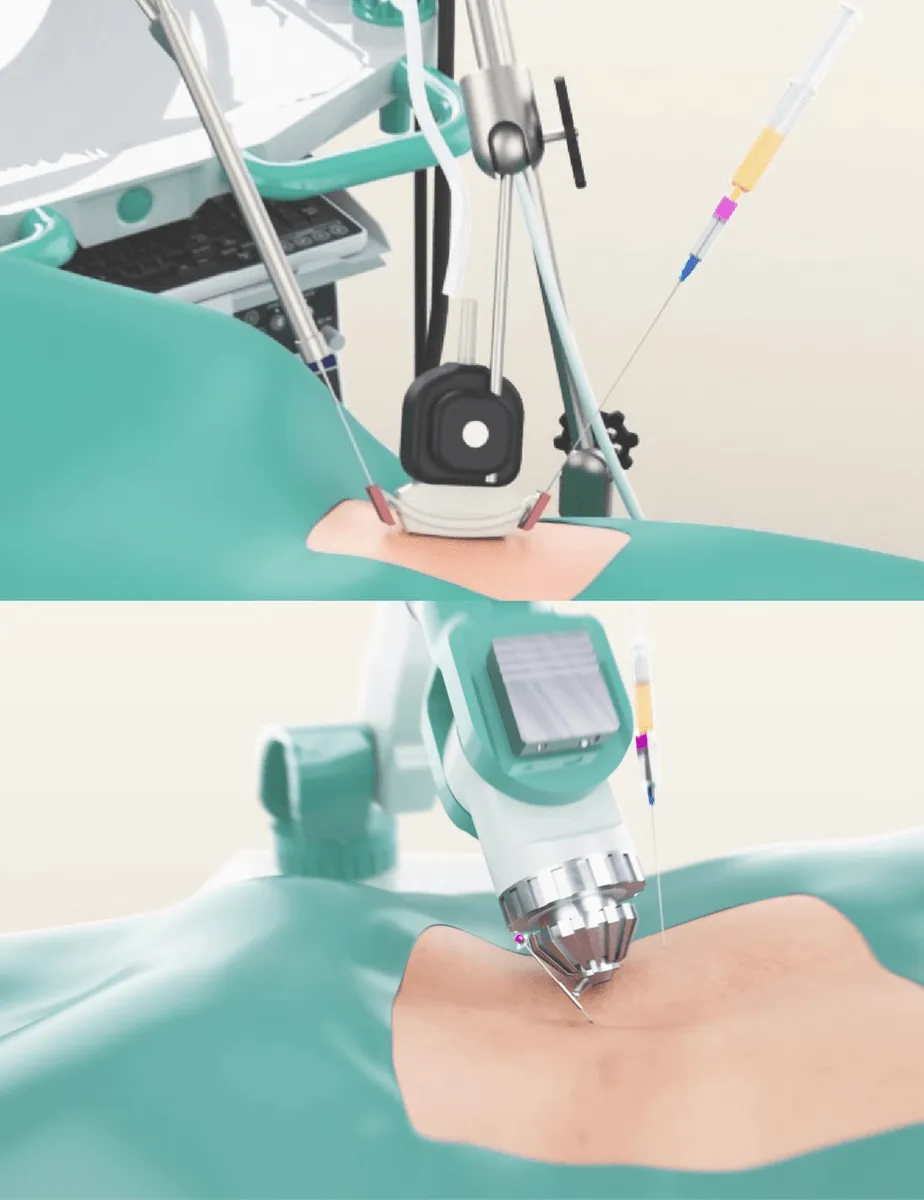
Cyber Navi Hand™
Intraoperative robotic navigation system. Provides precise access to deep structures with 1 mm and 1 degree accuracy.

Sono Control Arm™
Device for intervention under sonographic control. Eliminates open surgeries with real-time visual monitoring.