 Русский
  English
  Deutsch
  Español
  العربية
  中文
中文  Türkçe
  Français
  Italiano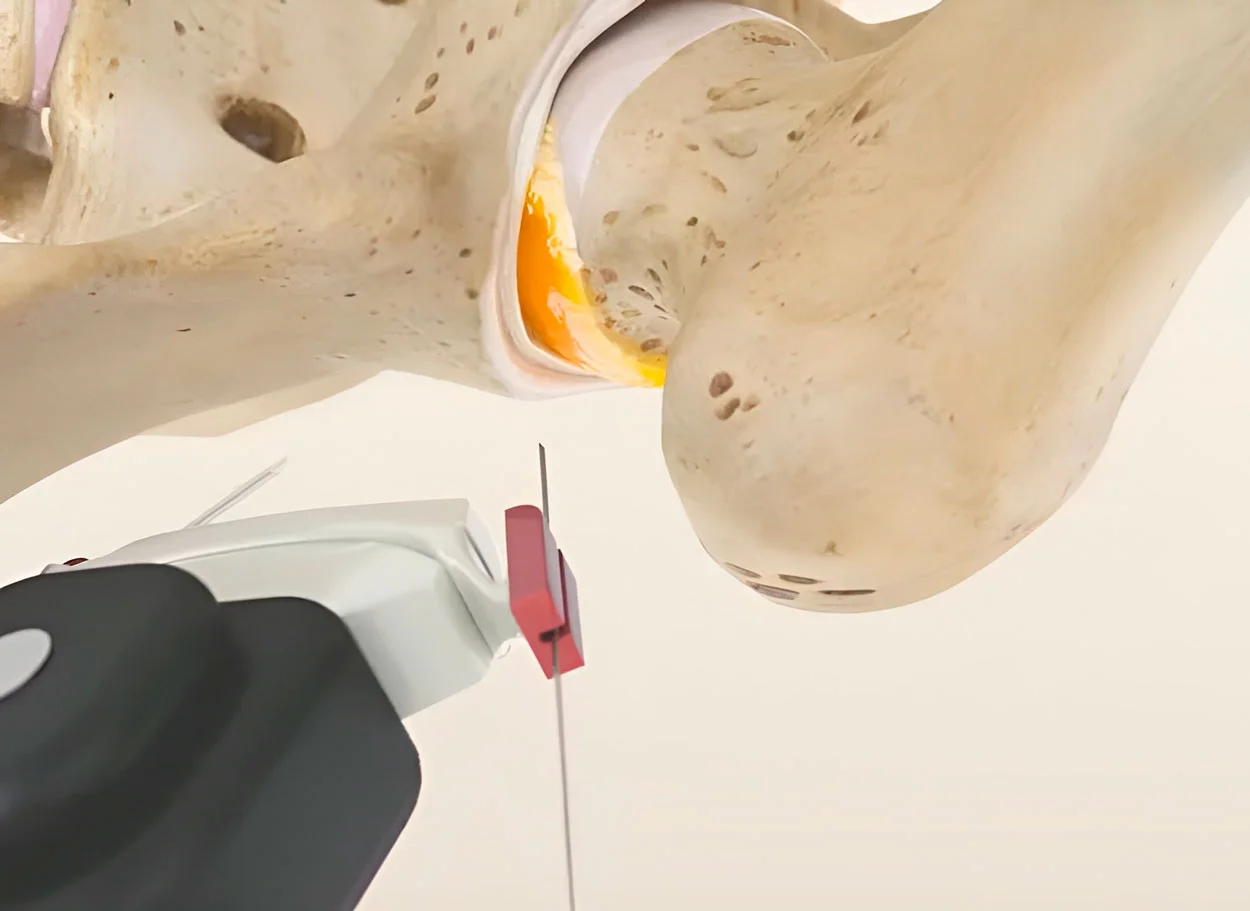
What is hip osteoarthritis (coxarthrosis)?
Hip osteoarthritis (coxarthrosis) is a degenerative-dystrophic disease in which the cartilage tissue covering the joint surfaces of the femoral head and acetabulum is destroyed.
This is the second most common osteoarthritis disease after knee osteoarthritis (gonarthrosis). According to the German Society for Orthopedics and Trauma (DGOU), hip osteoarthritis is diagnosed in 5% of the population over 60 years old. Over 230,000 hip replacement surgeries are performed annually in Germany.
Stages of hip osteoarthritis:
- Grade 1 — slight narrowing of the joint space, initial osteophytes. Pain after exertion
- Grade 2 — moderate narrowing of the joint space, pronounced osteophytes, subchondral sclerosis. Pain while walking
- Grade 3 — sharp narrowing of the joint space, cysts, deformation. Pain at rest, limited range of motion
- Grade 4 — complete disappearance of the joint space, pronounced deformation
Risk factors:
- Age over 50 years
- Excess weight
- Hip joint dysplasia
- History of joint injuries
- Avascular Necrosis of the Femoral Head
- Genetic predisposition
Facts about hip osteoarthritis
- ICD-10: M16
- Prevalence: 5% of population over 60 years
- Joint replacement: 230,000+ surgeries/year in Germany
- Prosthesis lifespan: 15-20 years
- Revision: up to 10% of patients require repeat replacement
Symptoms of hip osteoarthritis
Early signs
- Pain in the groin after physical exertion
- Morning stiffness (15-30 minutes)
- Discomfort with prolonged sitting
- Joint crepitus during movement
Progression
- Pain while walking radiating to the knee
- Limp
- Limited hip rotation and abduction
- Limb shortening
- Atrophy of thigh and gluteal muscles
Late Stages
- Pain at rest and at night
- Inability to walk more than 500 m
- Need for support while walking
- Significant limitation of mobility
- Decreased quality of life
Joint Replacement vs MIBRAR®
| Criterion | Joint Replacement | Hyaluronic Acid | MIBRAR® |
|---|---|---|---|
| Principle | Replacement of the joint with an artificial one | Joint lubrication | Regeneration of cartilage with own cells |
| Anesthesia | General / spinal | None | No general anesthesia (local anesthesia) |
| Hospitalization | 7-14 days | None | None — home the same day |
| Rehabilitation | 3-6 months | None | Several days |
| Joint Preservation | ❌ Joint is completely removed | ✅ Joint preserved | ✅ Joint preserved and regenerated |
| Duration of Effect | 15-20 years (then revision) | 6-12 months | 10-20+ years (regeneration) |
| Two Joints at Once | ❌ Only one joint | Possible | ✅ Yes — both joints + spine |
How MIBRAR® treats Hip Osteoarthritis (Coxarthrosis)
3D Diagnostics
MRI/CT of the hip joint is analyzed by the Cyber Navi Hand™ system. The condition of the cartilage, subchondral bone, and joint capsule is assessed. A precise access plan is created.
Biomaterial Preparation
CGF — concentrate of growth factors — is obtained from blood. Lipogems® with mesenchymal stem cells capable of differentiating into chondrocytes (cartilage cells) is obtained from subcutaneous adipose tissue.
Intra-articular Injection
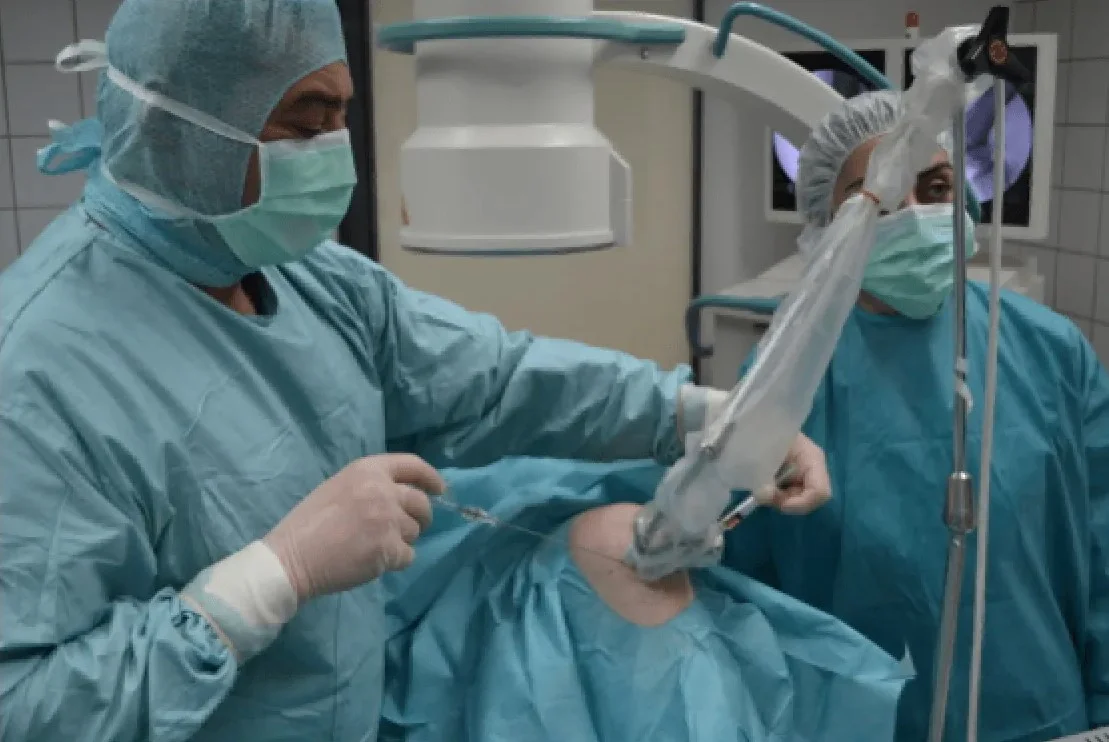
Under navigational control of Sono Control Arm™, concentrates are injected directly into the joint — into areas of maximum cartilage damage, subchondral cysts, and joint capsule.
Chondrogenesis
Stem cells differentiate into chondrocytes and begin producing new cartilage. Growth factors stimulate angiogenesis and reduce inflammation. After 3-6 months — visible restoration of cartilage coverage on follow-up MRI.
Why MIBRAR® is effective for Hip Osteoarthritis (Coxarthrosis)
Until recently, it was believed that cartilage is incapable of regeneration. Traditional medicine offered only two options: painkillers (symptom masking) or joint replacement. MIBRAR® has proven that a third option exists — biological regeneration of cartilage tissue with own stem cells.
Mechanism of Cartilage Regeneration:
- Chondrogenesis — mesenchymal stem cells (Lipogems®) differentiate into chondrocytes — cells that synthesize cartilage matrix (type II collagen, proteoglycans, hyaluronic acid)
- Anti-inflammatory Effect — CGF and Lipogems® suppress chronic joint inflammation (reduce levels of IL-1β, TNF-α), which accelerates cartilage destruction
- Restoration of subchondral bone — growth factors improve blood supply to subchondral bone, reduce edema and cysts
- Improvement of synovial fluid — stem cells normalize joint lubrication production, improving its tribological properties
- Strengthening of capsule and ligaments — growth factors strengthen the joint capsule and ligamentum teres of the femoral head
Key difference from hyaluronic acid: hyaluronic acid injections are "lubrication" lasting 6-12 months. MIBRAR® initiates true cartilage regeneration, confirmed by follow-up MRI and continuing for years.
MIBRAR® for Hip Osteoarthritis (Coxarthrosis)
- Joint preservation — not replacement
- Both joints at once — + knees + spine
- Sono Control Arm™ — ultrasound navigation for joints
- Without general anesthesia — local anesthesia
- No rehabilitation — walking the same day
- Does not interfere with joint replacement — if needed in the future
MIBRAR® Method Advantages
95% of interventions covered
MIBRAR® covers up to 95% of all spinal neurosurgery and orthopedic operations.
No anesthesia or incisions
Outpatient treatment via 0.3-1.5 mm puncture. No general anesthesia or hospitalization.
No age restrictions
Regeneration at any age. Safe for chronic conditions and anesthesia intolerance.
Rapid improvement
Concentrates have analgesic and anti-inflammatory properties. Relief within days.
Multiple zones at once
Simultaneous treatment of multiple discs or joints in one procedure.
Home the same day
No crutches, braces or rehabilitation needed. MRI follow-up at 8-16 weeks.
MIBRAR® Technology
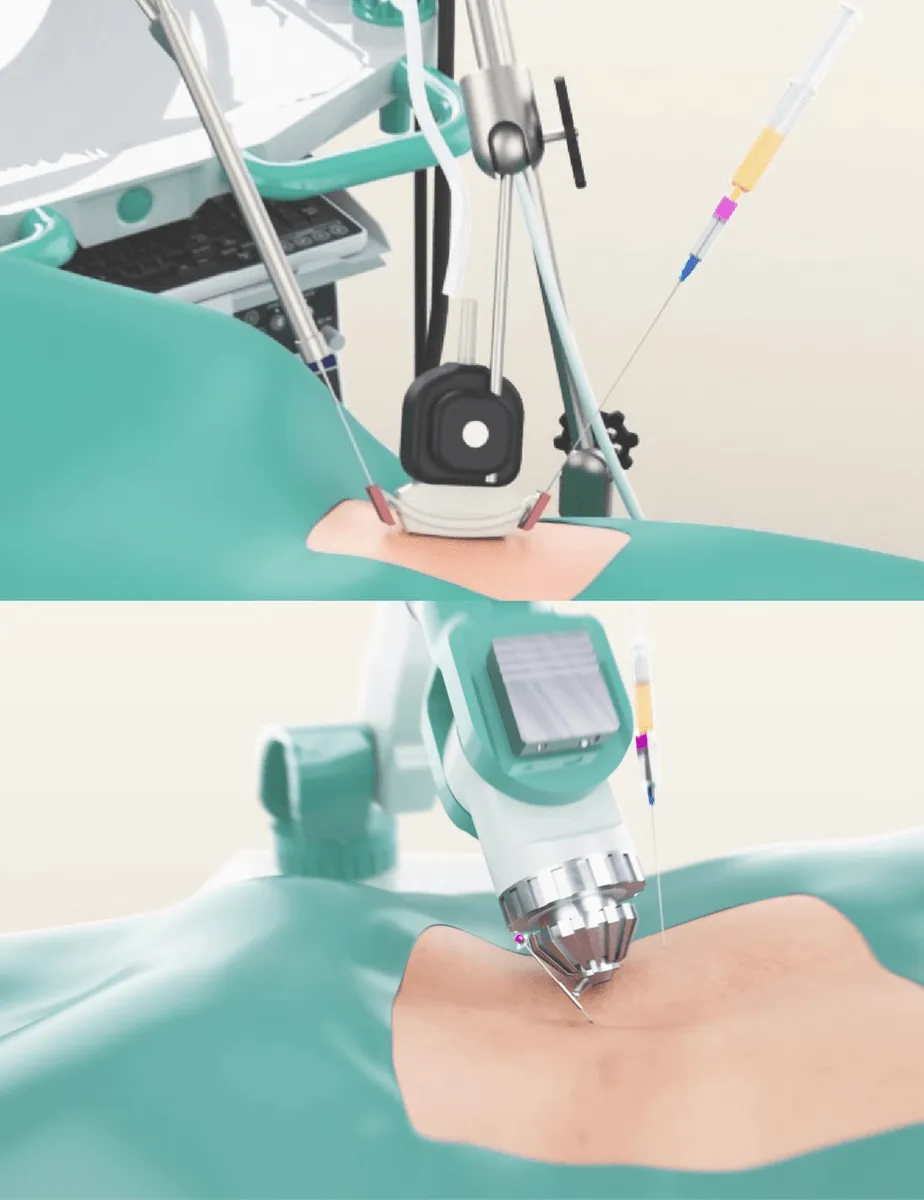
Cyber Navi Hand™
Intraoperative robotic navigation system. Provides precise access to deep structures with 1 mm and 1 degree accuracy.

Sono Control Arm™
Device for intervention under sonographic control. Eliminates open surgeries with real-time visual monitoring.