
 Русский
  English
  Deutsch
  Español
  العربية
  中文
中文  Türkçe
  Français
  Italiano
  Prof. Dr. med. Arsen Babayan
Hip osteoarthritis (coxarthrosis) grades 3–4 — a sentence to joint replacement? Not always. Regenerative medicine opens new possibilities for preserving the native joint.
When is joint replacement recommended?
Standard indications for hip joint replacement:
- Hip osteoarthritis III–IV stage per Kellgren-Lawrence
- Persistent pain syndrome unresponsive to conservative treatment
- Significant limitation of mobility
- Reduced quality of life
Problems with joint replacement
Despite high effectiveness, joint replacement has several drawbacks:
- Prosthesis lifespan — 15–20 years, after which revision is required
- Risk of complications — infection (1–2%), dislocation, thrombosis
- Rehabilitation — 3–6 months
- Limitations — prohibition on running, jumping, contact sports
What can MIBRAR® do for hip osteoarthritis grade 3?
Prof. Babayan and the MIBRAR® team have accumulated experience treating over 3,000 patients with hip osteoarthritis, including grade III. Results:
- Pain reduction by 70–85% in most patients
- Improvement in joint mobility by 40–60%
- Delay of joint replacement by 5–10+ years
- In some patients — complete avoidance of joint replacement
The key to success is the combination of CGF + Lipogems®, delivered directly to areas of maximum cartilage damage under precise navigation.
How does MIBRAR® work for hip osteoarthritis?
The hip joint is a deep ball-and-socket joint, difficult to access for injections. MIBRAR® solves this problem:
- 3D planning — Cyber Navi Hand™ analyzes MRI and identifies points of maximum cartilage damage
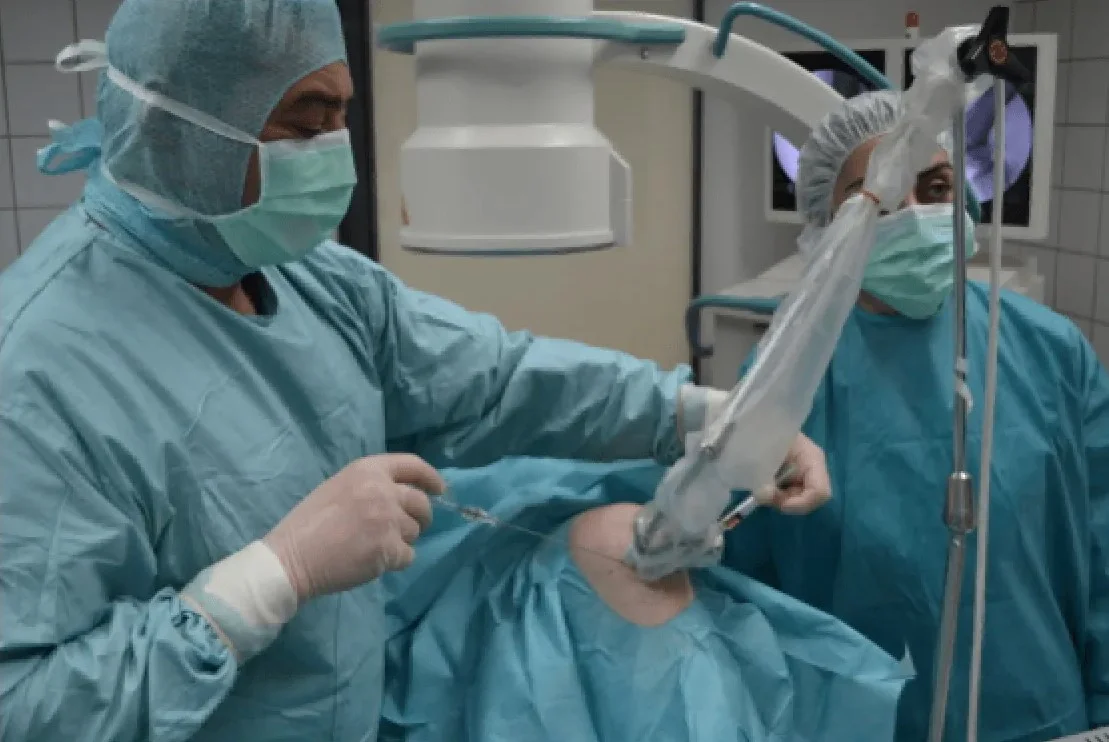
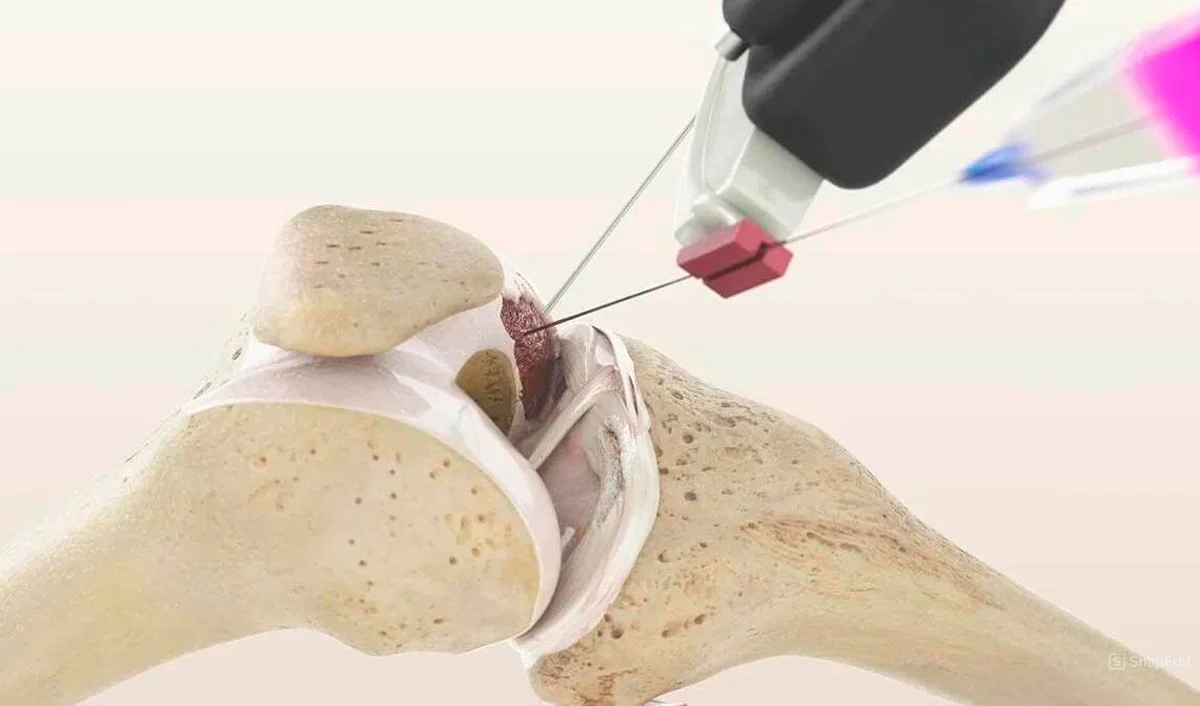
- Precise access — 1.5 mm micropuncture under ultrasound navigation with Sono Control Arm™
- Dual concentrate — CGF reduces inflammation, Lipogems® initiates chondrogenesis (new cartilage growth)
- Both joints at once — for bilateral hip osteoarthritis. With joint replacement — only one joint with 3-6 month intervals
Advantages for younger patients
For patients under 55 years, joint replacement is particularly problematic: the prosthesis lasts 15-20 years, after which revision surgery is required — technically more complex with worse outcomes. MIBRAR® allows preserving the native joint and delaying or completely avoiding replacement.
Related Articles

Assess your chances of preserving your native joint
Send MRI/X-ray images for free consultation
Book a Free Consultation