 Русский
  English
  Deutsch
  Español
  العربية
  中文
中文  Türkçe
  Français
  Italiano
  Prof. Dr. med. Arsen Babayan
«Stem cells»—a term used by everyone: from serious clinics to beauty salons. Patients hear promises to «grow new cartilage» and «rejuvenate joints,» but reality is more complex. We debunk 7 most persistent myths.
Myth 1: «Stem cells can grow a new joint»
Truth: Mesenchymal stem cells (MSCs) can differentiate into chondrocytes and osteoblasts, but growing a whole anatomical structure in vivo is not yet possible. Science can stimulate regeneration of damaged tissue—restoration of cartilage, healing of the disc's fibrous ring, acceleration of fracture healing.
This is not «growing a new joint,» but real reduction of degeneration and restoration of function.
Myth 2: «All stem cells are the same»
Truth: There is a fundamental difference between types:
- Embryonic—NOT used in orthopedics (ethical restrictions)
- Allogeneic (donor)—risk of rejection, not legal in all countries
- Autologous (own)—from bone marrow (BMAC), adipose tissue (SVF/Lipogems®), blood (PRP/CGF)
Autologous MSCs from adipose tissue (Lipogems® technology) are considered the gold standard: minimal invasiveness of harvest, high cell concentration, no rejection risk.
Myth 3: «One injection solves everything»
Truth: Results depend on:
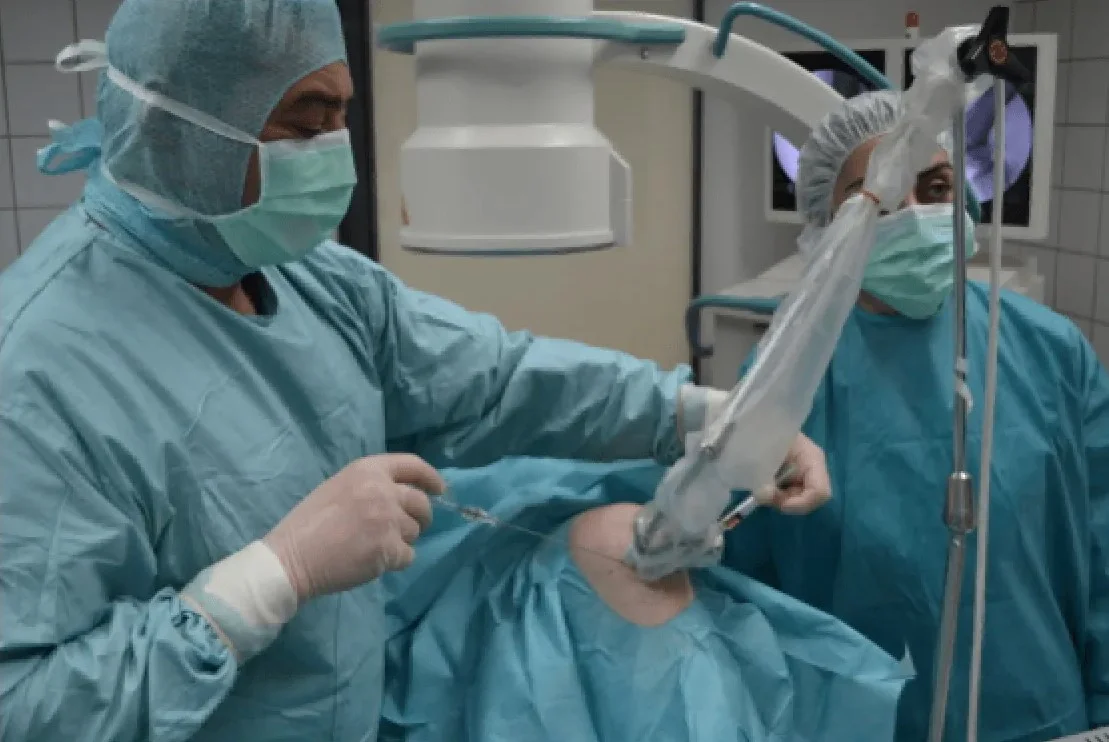
- Precision of delivery—cells must reach exactly the damage (that's why MIBRAR® uses 3D navigation Cyber Navi Hand™)
- Concentrate quality—standard PRP contains 5–10 times fewer growth factors than CGF
- Disease stage—stage II osteoarthritis responds better than stage IV
- Rehabilitation—without proper recovery protocol, effect diminishes
Myth 4: «Stem cells are experimental therapy»
Truth: Autologous cell concentrates are approved by regulators:
- Lipogems®—FDA 510(k) clearance, CE Mark class IIa
- PRP/CGF—standard in European orthopedics, >15,000 PubMed publications
This is not «experimental,» but a class of medical procedures with 20-year history and hundreds of thousands of procedures performed.
Myth 5: "Stem Cells Help with Any Disease"
Truth: Cell therapy is not effective for all conditions. The evidence base is strong for:
- ? Knee Osteoarthritis (Gonarthrosis) stages I–III
- ? Hip Osteoarthritis (Coxarthrosis) stages I–III
- ? Herniated Discs
- ? Rotator Cuff Tears
- ? Meniscus Tears
- ?? Stage IV osteoarthritis (bone-on-bone) — benefits are limited
Myth 6: "The More Cells, the Better"
Truth: The number of cells matters, but equally important are:
- Viability — percentage of live cells after processing (Lipogems® preserves >95%)
- Microenvironment — stromal matrix in which cells are delivered
- Growth factors — CGF provides prolonged release of PDGF, VEGF, TGF-?
This is why MIBRAR® combines Lipogems® (stem cells + matrix) with CGF (growth factors) — dual regeneration mechanism.
Myth 7: "This Is a Very Painful Procedure"
Truth: The procedure is performed under local anesthesia:
- Harvesting adipose tissue — through a 3 mm puncture (like liposuction)
- Injection into joint/disc — through a micropuncture 0.3–1.5 mm
- Entire procedure — 40–60 minutes, outpatient
- Patient goes home the same day
Compare with surgery: general anesthesia, incisions, hospitalization 3–5 days, rehabilitation 3–6 months.
How to Distinguish Real Cell Therapy from Marketing
- Ask for the specific product name (Lipogems®, Arthrex ACP, EmCyte, etc.)
- Check regulatory status (CE Mark, FDA clearance)
- Request follow-up MRI after 3–4 months
- Look for the doctor's scientific publications
- Avoid clinics promising "100% guarantee"
Frequently Asked Questions
Want to know if cell therapy is right for you?
Send MRI images for free evaluation
Book a Consultation