
 Русский
  English
  Deutsch
  Español
  العربية
  中文
中文  Türkçe
  Français
  Italiano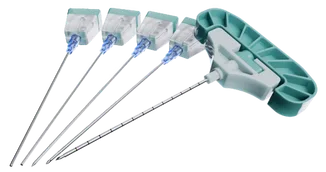
What Lipogems® is
Lipogems® is an Italian medical system for the mechanical processing of adipose tissue, developed by Carlo Tremolada in 2010. It received FDA approval (USA, 2014) and the CE mark (EU, 2015) as a minimally manipulated tissue, allowing its use without a special ATMP licence. The principle of operation is a closed sterile system with a series of microfilters and saline solutions that "wash" the lipoaspirate of blood, residual triglyceride oil and pro-inflammatory components, while preserving the stromal-vascular structure with an intact mesenchymal stem cell niche.
Indications for Lipogems® Ortho
Lipogems® is the method of choice when simple PRP therapy is no longer effective and surgery is still distant. Particularly valuable is the combination of true tissue regeneration (via MSCs) with a powerful anti-inflammatory effect (MSCs secrete IL-1Ra, TGF-?, IL-10).
Stage II–III osteoarthritis
Gonarthrosis, coxarthrosis, omarthrosis, ankle arthrosis, rhizarthrosis. Lipogems® is particularly effective where simple PRP no longer copes — the presence of stem cells provides genuine cartilage regeneration.
Chronic tendinopathies
Resistant to conservative therapy: Achilles tendinopathy >12 months, "tennis/golfer’s elbow", patellar tendinopathy, rotator cuff tendinopathy, long head of the biceps.
FBSS (failed back surgery syndrome)
Epidural and foraminal Lipogems® injections for scar-adhesive fibrosis, instability of the operated segment, "adjacent segment" syndrome. Effectiveness 65–75%.
Partial ligament tears
Grade I–II tears of the ACL, PCL, medial collateral ligament, rotator cuff — to biostimulate healing and avoid surgery.
Bone marrow edema (BME)
Bone Marrow Edema Syndrome — bone marrow oedema visible on STIR MRI. Lipogems® combined with offloading is effective in 80% of cases and prevents progression to avascular necrosis.
Degenerative disc disease
Intradiscal Lipogems® injections for early degeneration (Pfirrmann II–III), discogenic pain. Disc height restoration up to 10–15%, hydration up to 25%.
Synovitis and chronic inflammation
Non-infectious synovitis, chronic bursitis. Stem cells have a strong immunomodulatory effect — they suppress pathological inflammation without causing immunosuppression.
How the procedure is performed
1. Local tumescent anaesthesia
A special solution (saline + lidocaine + adrenaline) is injected into the fat harvesting area (abdomen, thighs), separating the fat lobules and providing anaesthesia. Duration 10 minutes.
2. Mini-liposuction
Through a 3–4 mm puncture, a thin cannula collects 30–60 ml of adipose tissue (lipoaspirate). The procedure is virtually painless and leaves a minimal cosmetic mark.
3. Processing in the Lipogems® system
A closed sterile system: the lipoaspirate passes through a series of filters with saline solution. Erythrocytes, pro-inflammatory molecules and triglyceride oil are removed. The stromal-vascular structure with MSCs is preserved. Duration 25–30 minutes.
4. Ultrasound-guided injection
The final product (~6–8 ml) is injected into the target structure under the control of Sono Control Arm™ and Cyber Navi Hand™. If necessary — combined with CGF (which prolongs the effect). Duration 15–20 minutes.
5. Observation and discharge
30 minutes of observation. Dressing of the fat harvest area. Recommendations sheet: compression garment on the abdomen for 7 days, cold to the injection area for 48 hours, rest for 5–7 days.
Effectiveness by indication
Data are based on systematic PubMed reviews (Russo et al. 2017, Pers et al. 2016) and the internal statistics of MIBRAR® Medical Center (4500+ Lipogems® procedures since 2015).
Frequently asked questions
Lipogems® is an Italian system for the mechanical processing of adipose tissue (lipoaspirate) without enzymes or cell culture. This is critical for compliance with EU Regulation 1394/2007 — Lipogems® is classified as a "minimally manipulated tissue" and does not require an ATMP licence. The output is a tissue product with an intact mesenchymal stem cell niche (~2.5 million MSCs/ml) and preserved stromal structure.
SVF (Stromal Vascular Fraction) is obtained by enzymatic (collagenase) processing of fat — the tissue is broken down into individual cells. This yields a higher MSC concentration but in the EU it falls under ATMP regulation (a GMP licence is required). Lipogems® uses mechanical processing without enzymes — MSC concentration is lower but their natural microenvironment is preserved, which is important for survival and function after implantation.
Standard sites are the lateral abdomen or the inner thighs. Under local anaesthesia (tumescent infiltration), a 3–4 mm puncture is made and 30–60 ml of fat is harvested with a thin mini-invasive liposuction cannula. Cosmetic effect — slight volume reduction in the harvest area, leaving only a small puncture mark.
From 30 ml of lipoaspirate, ~6–8 ml of final Lipogems® product is produced, containing 15–20 million mesenchymal stem cells. That is 100–500 times more than in even the most concentrated PRP. For comparison, BMAC from 60 ml of bone marrow yields ~2–5 million MSCs.
No. The entire procedure is performed under local (tumescent) anaesthesia. The patient remains fully conscious; light sedation is available if required. Duration 60–90 minutes. Followed by 30 minutes of observation and discharge home. The next day most patients return to their usual activities.
Unlike PRP, Lipogems® is usually performed once and produces a long-lasting effect of 2–5 years. A repeat procedure is only considered if symptoms return — not to enhance the first effect. The reason is that MSCs "engraft" and continue to modulate recovery for many months.
In the first 2–3 weeks, there is usually no improvement (the engraftment period); some patients even experience a temporary increase in pain (this is normal). After 4–6 weeks — improvement begins. After 3 months — a clear effect. Maximum effect — by 6–12 months. After 12 months a control MRI is performed to assess morphological changes (cartilage repair).
Yes. Lipogems® is one of the safest regenerative procedures and can be performed at any age. In older patients the number of MSCs in fat is reduced (compared with 30-year-olds) but their function is preserved. Age-related contraindications are the same as for local anaesthesia: decompensated cardiovascular disease, severe diabetes mellitus.
Compensated diabetes mellitus (HbA1c <8%), stable coronary artery disease, controlled hypertension are not contraindications. Decompensated forms are relative contraindications and require prior stabilisation by a specialist. COPD, decompensated heart failure during exacerbation — postpone the procedure.
Is Lipogems® right for your case?
Send your MRI and a description — Professor Babayan will determine whether Lipogems® is optimal or whether another combination (CGF, BMAC) is preferable. Free, within 48 hours.
Send MRI +49 160 5736643